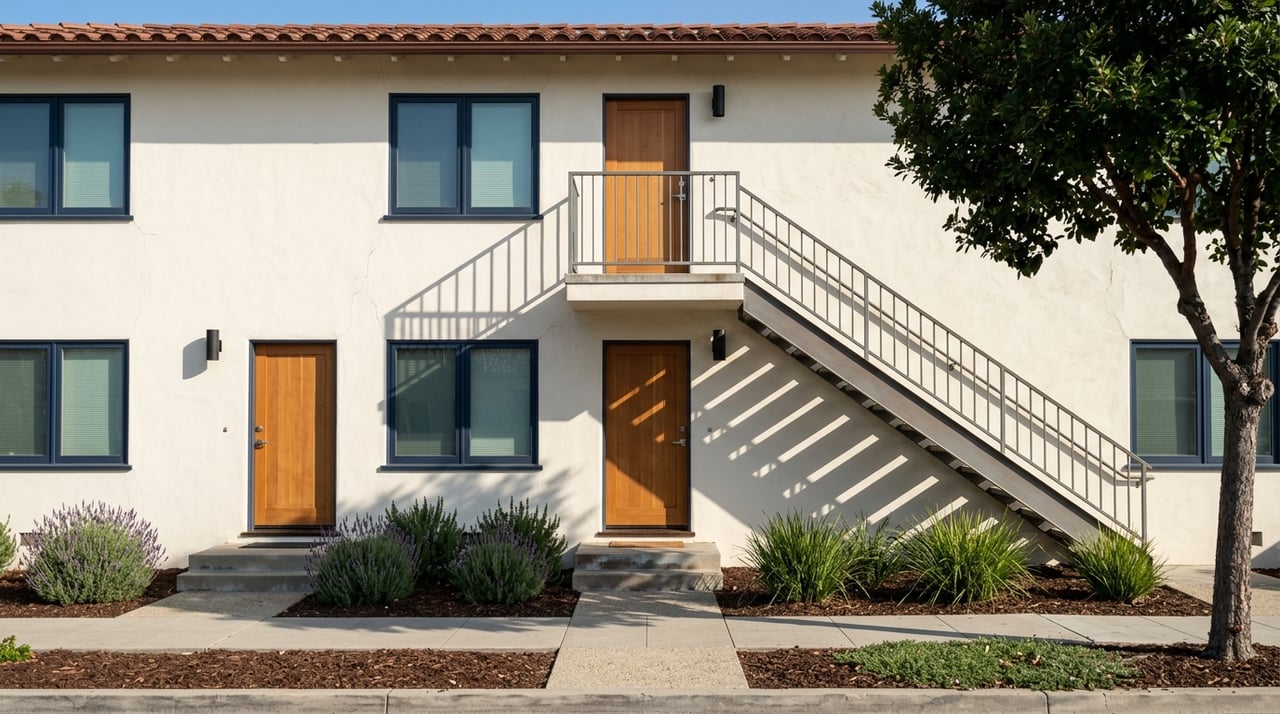
Oakland Duplex Investment Guide for Long-Term Investors
May 14, 2026
May 14, 2026
If you are eyeing an Oakland duplex or triplex as a long-term investment, the numbers can look promising at first glance. But in Oakland, small multifamily investing is not just about purchase price and monthly rent. You also need to understand local rent rules, eviction protections, registration deadlines, business taxes, and property-specific diligence before you commit. Let’s dive in.
Oakland has a real base of small multifamily housing, which is one reason duplexes and triplexes stay on investors’ radar. In the city’s 2025/2026 to 2029/2030 Consolidated Plan, Oakland reports 171,755 total housing units, with 30,460 units, or 18%, in 2 to 4 unit structures.
That matters because it shows duplexes and triplexes are not a niche product here. Oakland also reports that 52% of its housing units are in multi-unit structures overall, which gives you a sense of how important attached housing is to the local market.
Oakland also remains renter-heavy. Census data shows an owner-occupied rate of 42.3%, which means renters make up a substantial share of the market and rental demand deserves close attention in your underwriting.
Broad rent data can help you frame the market, but it should not replace block-by-block research. Oakland’s 2020 to 2024 median gross rent is $1,979, while Alameda County’s median gross rent is $2,357.
For another reference point, HUD’s FY2025 Fair Market Rents for the Oakland-Fremont area are $2,201 for a one-bedroom, $2,682 for a two-bedroom, $3,432 for a three-bedroom, and $4,077 for a four-bedroom. HUD notes these are gross-rent estimates at the 40th percentile, so they are better used as a conservative benchmark than as a pricing tool for a specific neighborhood or building.
If you are analyzing a duplex or triplex, your real focus should be current rent comps, unit condition, and actual operating costs. In Oakland, small changes in location, layout, and tenancy can have a big effect on performance.
One of the biggest mistakes small multifamily buyers make is assuming an owner-occupied duplex or triplex works like a single-family home. In Oakland, that can be a costly misunderstanding.
As of August 1, 2025, Oakland’s allowable annual rent increase under the Rent Adjustment Program is 0.8%. At the same time, the city distinguishes between rent control and eviction protections, and that difference matters.
Oakland’s city materials show that an owner-occupied duplex or triplex is marked “No” for rent control but “Yes” for eviction protections. So even if a property is not subject to local rent control in the way you expected, it may still be covered by Oakland’s just-cause eviction rules.
Oakland says Measure Y removed the old exemption for owner-occupied duplexes and triplexes from just-cause protections. That means landlords in those properties must have just cause to evict and must follow relocation requirements for no-fault evictions, unless another exemption applies.
The city also states that just-cause protections cover owner-occupied duplex and triplex complexes, along with most apartments, many condos, single-family homes, and other rental housing types. For a buyer planning to live in one unit and rent the others, that is a major practical point.
Measure V expanded just-cause coverage further to all residential rental units built after December 31, 1995, except for ground-up new construction with a certificate of occupancy within the past 10 years. In plain terms, even newer duplexes and triplexes may eventually fall under Oakland’s local eviction rules once that newer-construction window ends.
California’s statewide Tenant Protection Act is still relevant, but it is not the only rulebook. The California Department of Real Estate says the law generally caps annual rent increases at 5% plus CPI, or 10%, whichever is lower.
That same guide notes exemptions that can include a duplex where the owner occupied one unit as a principal residence at the beginning of the tenancy and continues to live there, as well as housing with a certificate of occupancy from the previous 15 years. But in Oakland, statewide rules and local rules need to be reviewed together, not separately.
For long-term investors, that means you should avoid making assumptions based on California law alone. Oakland’s local framework can be stricter, and the tenancy details matter.
Oakland requires annual rent registration for covered units. The city says all units subject to the RAP fee must be registered, including multifamily properties with 2 or more units built before April 1, 2016, and owners must renew that registration annually by March 1.
The city also makes clear that coverage can extend beyond traditional apartment buildings. Depending on configuration and occupancy, ADUs, condos, single-family homes, and rented rooms may also fall into the broader covered-unit framework.
For a duplex or triplex buyer, this means one of your first diligence questions should be whether the property is already in the rent registry and whether the seller’s records are complete. Missing registration details can create confusion after closing.
A solid pro forma in Oakland needs to include city-specific expenses. The city says landlords must register for and renew a Business Tax Certificate annually and pay business tax based on annual gross rental receipts.
Oakland’s current landlord business-tax page lists a $109 application fee, a general tax rate of $13.95 per $1,000 of annual gross rental income, and a RAP fee of $137 per tenant at registration and renewal. Those are not side notes. On a small property, they can change your cash flow more than buyers expect.
If you are planning a long hold, sale costs matter too. Oakland’s real property transfer tax applies to all transfers of real property within city limits, and the current schedule ranges from 1.0% to 2.5% depending on transaction value.
That transfer tax is especially important when you model your exit. It may not change whether you buy, but it should absolutely shape how you think about future returns.
Some buyer-occupants may benefit from Oakland’s owner-occupied residential landlord business-tax exemption program. The city says a residential landlord who rents or leases up to three rooms in a principal residence, up to two ADUs, or a covered unit in a duplex may qualify for a full or partial business-tax exemption through December 31, 2030.
This is most relevant if you plan to live on-site and rent part of the property. For the right buyer, that can materially improve the numbers during the hold period.
It is also a good example of why occupancy strategy matters in Oakland. The same property can pencil differently depending on whether you are a pure investor or an owner-occupant.
Most duplex and triplex buyers focus on rent rules first, which makes sense. But physical condition deserves just as much attention.
Oakland’s mandatory soft-story retrofit program generally applies to buildings built before 1991 with five or more dwelling units and a vulnerable lower story. That means it is more commonly an issue for larger apartment buildings than for a typical duplex or triplex.
Still, the broader lesson is important. Seismic and structural due diligence belongs in your underwriting, especially in the East Bay, where deferred maintenance and older construction can affect both upfront and long-term costs.
If your plan involves creating a new duplex or triplex, Oakland’s permitting path is not simple. The city says new duplexes require Design Review and a Building Permit, and projects with three or more new primary dwelling units also require Design Review before building permits are issued.
Oakland also notes that 1 to 4 unit housing projects, including duplexes and triplexes, may qualify for faster ministerial review under Objective Design Standards when they meet the applicable criteria. That may help some projects move more efficiently, but it does not remove the need for careful planning.
If you are buying an existing property with the hope of adding value later, it is smart to look at redevelopment and permitting risk early. A value-add idea on paper is only useful if the city will actually allow it.
In Oakland, the best investor questions are often very specific. Before you move forward on a duplex or triplex, consider asking for clear documentation on these points:
These questions matter because Oakland’s rules can change based on build year, occupancy status, and whether a property falls within a newer-construction exemption window. The details are not minor here. They are central to value.
Oakland duplexes and triplexes can make sense for long-term investors because they sit inside a substantial rental market with a meaningful base of small multifamily housing. But they reward buyers who go beyond surface-level math.
The strongest purchases are usually the ones backed by disciplined local underwriting. That means looking closely at rent limits, just-cause protections, registration requirements, business taxes, transfer taxes, condition risk, and permitting constraints before you write an offer.
If you want help evaluating an Oakland duplex or triplex through a neighborhood-first lens, local guidance can save you time and expensive mistakes. For practical insight on Oakland small multifamily opportunities, reach out to Sharon Alva for a free neighborhood consultation.
October 15, 2026
October 8, 2026
October 1, 2026
September 24, 2026

September 17, 2026

September 10, 2026

September 10, 2026
September 3, 2026

August 27, 2026
Get assistance in determining current property value, crafting a competitive offer, writing and negotiating a contract, and much more. Contact me today.