Is Uptown Oakland Loft Living Right for Your Lifestyle?
May 7, 2026
May 7, 2026
If you want a home that puts coffee, transit, dinner plans, and live performances within a few blocks, Uptown Oakland deserves a close look. This part of Oakland offers a distinctly urban rhythm, and that can feel exciting, efficient, and a little hard to picture until you understand how the neighborhood really works day to day. In this guide, you’ll get a practical look at Uptown loft living, the housing mix, the lifestyle, and the trade-offs so you can decide if it fits the way you want to live. Let’s dive in.
Uptown sits at the northern edge of Downtown Oakland and works best for buyers who want a walkable, transit-oriented setting instead of a lower-density residential feel. The City of Oakland places it roughly between 27th Street, San Pablo Avenue, and City Center, and the area is closely tied to downtown’s long-term growth plan.
That bigger picture matters. Oakland’s Downtown Oakland Specific Plan, adopted in July 2024, is meant to guide development over the next 20 years and anticipates 29,100 new housing units downtown, including more than 7,200 affordable units. For buyers, that points to an area with continued public attention and ongoing reinvestment.
What gives Uptown its identity is not just housing. The neighborhood is shaped by theaters, public art, restaurants, and recurring arts events, with well-known anchors like the Fox and Paramount theaters, Oakland Art Murmur, and First Fridays helping define the local experience.
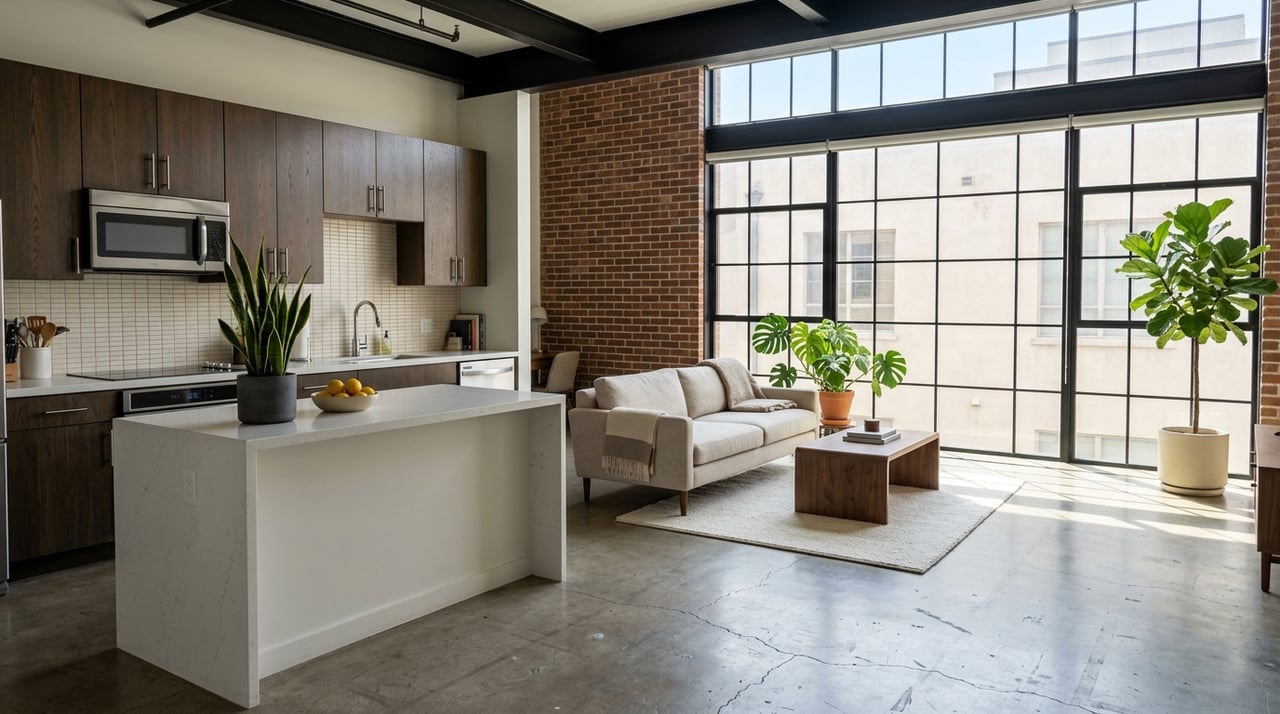
In Uptown, “loft living” is tied to Oakland’s long history of adaptive reuse. The city explains that Oakland’s live-work tradition grew from repurposed warehouses and industrial or commercial buildings, where artists were drawn to open interiors and abundant light.
That history still shows up in the housing stock today. Uptown’s residential mix includes converted older buildings, landmark-adjacent rehabs, and newer multi-family construction, which is why the area often feels like a blend of loft, condo, and live-work culture rather than one single housing type.
For many buyers, that mix is the appeal. You may find spaces with more industrial character and a sense of architectural history, or newer buildings with more contemporary layouts and amenities. In practical terms, Uptown offers variety within a compact urban district.
A few city case studies help illustrate the range of housing in the neighborhood. Oakland highlights projects such as The Uptown Apartments at 500 William Street, Fox Courts at 550 18th and 555 19th, and the Uptown Arts Building at 1629 Telegraph.
The Uptown Arts Building is especially useful as an example of the area’s historic rehab pattern. According to the city’s green-building case study, the terra cotta building was restored so the original facade could be seen again, which speaks to the way older architecture still contributes to Uptown’s street presence.
Fox Courts shows that urban housing here can include more than a compact unit in a central location. The city describes it as an 80-unit affordable rental development with childcare, two courtyards, a computer learning center, a multipurpose room, and a yoga lounge. Even if your own housing search looks different, it reflects the broader point that Uptown includes a range of building forms and resident amenities.
One of Uptown’s biggest strengths is how easy it is to build your routine around transit and walking. BART says the 19th Street Oakland station at 1900 Broadway sits in the heart of Uptown near the Paramount Theatre, and 511 identifies the Uptown Transit Center at 20th and Broadway as being served by BART, AC Transit, and the Broadway Shuttle.
For many residents, that creates a very different daily pattern than you might have in other parts of the East Bay. Instead of planning your day around driving, you can step out for coffee, head to transit, and return to a neighborhood where dinner, drinks, or a performance may already be close at hand.
The city is also working on the public realm around the station. Oakland’s project list includes the 19th Street BART to Lake Merritt Urban Greenway, a streetscape effort intended to improve the connection between the station and Lake Merritt.
That focus on the pedestrian experience helps explain why Uptown often feels active beyond simple convenience. The route in and around the station is part of the neighborhood identity, not just a commute corridor.
Uptown’s streetscape stands out because art is woven into the neighborhood in visible ways. The City of Oakland says the 17th Street entrance to 19th Street BART was redesigned as a gateway to Uptown, and Uptown ArtPark at Telegraph and 19th Street served as a temporary outdoor gallery and performance space.
That matters more than it may sound on paper. In some downtown districts, you move quickly from one destination to the next. In Uptown, the built environment itself helps create a sense of arrival, activity, and local identity.
For buyers considering loft or condo living, that can be part of the value proposition. You are not only choosing a unit. You are also choosing a neighborhood atmosphere that feels intentionally urban and culturally active.
If you are drawn to neighborhoods with things to do after work, Uptown has one of Oakland’s clearest entertainment identities. The Fox Oakland Theater and Building is a designated city landmark and functions as a performing arts venue and educational facility that houses the Oakland School for the Arts.
Nearby arts programming adds to that energy. Oakland First Fridays says its monthly festival runs from 5 to 9 PM on Telegraph Avenue between 22nd and 27th Streets and can draw up to 30,000 people, while Oakland Art Murmur’s Saturday Stroll offers a lower-crowd option with member galleries and studios open from 1 to 5 PM on Saturdays.
That means the neighborhood can feel very different depending on the night. On event evenings, streets are busier and more animated. On other days, you still benefit from the concentration of cafes, restaurants, galleries, and performance venues, but at a more regular pace.
Current food and drink listings from Visit Oakland also help paint the picture of the daily rhythm. Rare Blend Cafe supports the morning coffee routine, while places like Hutch Bar & Kitchen, Viridian, and Drake’s Dealership reinforce Uptown’s strong evening scene.
Uptown is not trying to be a quiet, yard-centered neighborhood, and that is important to understand upfront. The same features that make it appealing, such as festivals, nightlife, and steady street activity, also mean more crowds, more urban noise, and a parking environment that may feel less relaxed than in lower-density neighborhoods.
First Fridays are the clearest example. An event that can draw tens of thousands of visitors brings energy and visibility to the district, but it also changes traffic, foot traffic, and noise levels during those times.
For some buyers, that is a feature. For others, it is a sign that the neighborhood may be better enjoyed as a destination than as a home base. The key is to match the setting to your habits, tolerance for activity, and priorities.
Uptown tends to make the most sense for buyers who value low-maintenance, location-driven living. If you want a home base close to transit, restaurants, arts programming, and downtown amenities, the neighborhood can check a lot of boxes.
It can also be especially appealing if you are still early in your search and trying to picture lifestyle before square footage. Uptown is one of those places where the question is often less about lawn size and more about whether you want to step outside into a theater-and-restaurant district with BART at the center.
That does not mean every loft or condo here looks the same or serves the same buyer. Some people are drawn to historic character and adaptive reuse. Others want newer construction and a simpler lock-and-leave setup. Uptown’s value is that it offers both within a compact urban footprint.
If you are seriously considering Uptown, it helps to look beyond listing photos and ask how the building and location support your routine. A good starting checklist includes:
It is also smart to visit at different times. A weekday morning, an early evening, and a First Friday or Saturday Stroll can each show you a different side of the neighborhood.
That kind of on-the-ground comparison is where local guidance really helps. Uptown is easy to like in broad terms, but choosing the right block, building style, and activity level takes a more detailed neighborhood read.
If you are weighing Uptown against other Oakland or Inner East Bay options, a neighborhood-first conversation can help you narrow the field faster. For tailored guidance on lofts, condos, and urban living options in Oakland, reach out to Sharon Alva for a free neighborhood consultation.
October 15, 2026
October 8, 2026
October 1, 2026
September 24, 2026
September 17, 2026

September 10, 2026

September 10, 2026
September 3, 2026

August 27, 2026
Get assistance in determining current property value, crafting a competitive offer, writing and negotiating a contract, and much more. Contact me today.