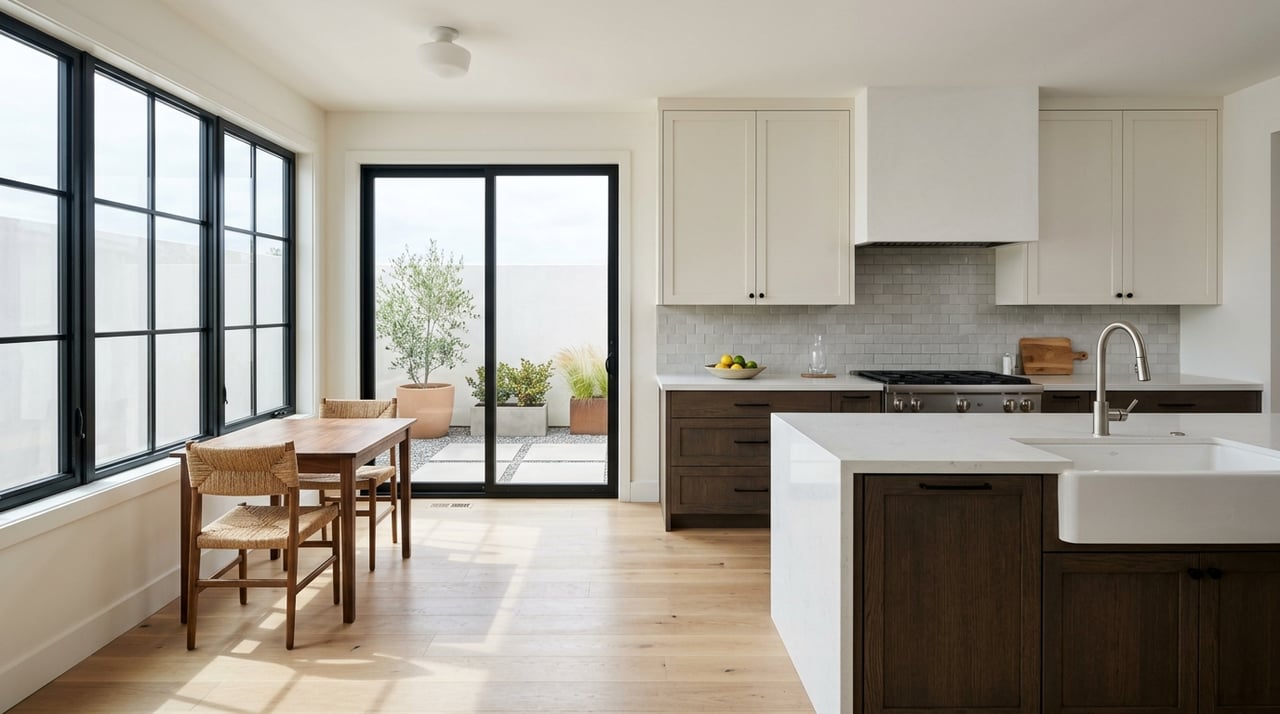
Berkeley Single-Family Homes For Move-Up Buyers
May 21, 2026
May 21, 2026
Wondering whether moving up to a single-family home in Berkeley still makes sense in a market this competitive? If you already know the East Bay and want more space, a better layout, or a home that fits your next chapter, Berkeley can be a smart but nuanced move. The key is understanding where the market has cooled, where competition still shows up fast, and how location, property condition, and future flexibility all shape the right decision. Let’s dive in.
Berkeley offers something many buyers want but struggle to find in one place: established residential blocks, strong transit access, distinctive architecture, and a range of neighborhood settings. You can find urban, transit-friendly areas near Downtown Berkeley and Ashby, or more leafy, residential pockets in North Berkeley and Elmwood.
For move-up buyers, that variety matters. You may not just be shopping for square footage. You may be looking for a different daily routine, an easier commute, more outdoor space, or a property that can evolve with your needs over time.
If Berkeley felt overheated a few years ago, that impression was real. The city’s 2025 dashboard shows the single-family market had leveled off rather than re-accelerated, with 46 single-family homes sold in December 2025 compared with 37 in December 2024.
The median sale price for single-family homes in that December 2025 snapshot was $1,265,000. That was down from $1,430,000 in 2024 and well below the 2022 peak of $1,810,000. At the same time, Realtor.com still classified Berkeley as a seller’s market in April 2026, with a median listing price of $1.195 million, a median sold price of $1.6 million, and a median 27 days on market.
The big takeaway is simple: Berkeley is still expensive and still competitive, but it is not behaving like every well-prepared buyer must expect a frenzy on every house. For move-up buyers, that creates room for a more selective strategy.
Today’s Berkeley single-family market rewards preparation more than panic. Well-located homes, appealing layouts, and properties with updated systems can still move quickly, especially when they line up with what buyers want most.
At the same time, not every listing triggers the same response. If a home needs work, has a more specialized location, or raises questions about permits, energy compliance, or future remodeling, buyers may have more time to evaluate it carefully.
That is good news if you are moving up thoughtfully. Instead of chasing the highest number or the hottest zip code, you can focus on fit.
Berkeley pricing varies sharply by submarket. April 2026 Realtor.com data showed median listing prices of about $679,000 in 94704, $845,000 in 94709, $1.0 million in 94703, $1.389 million in 94708, and $1.8475 million in 94705.
Those figures cover all home types, not just detached homes, so they are not a direct apples-to-apples guide for single-family buyers. Still, they show how much your budget, expectations, and trade-offs can shift depending on where in Berkeley you focus your search.
If you are hoping new inventory will make detached homes easier to find, Berkeley’s development pipeline tells a different story. The city’s 2025 pipeline included 1,687 proposed units across 11 projects, with most of that activity centered near transit corridors and UC Berkeley.
In practical terms, most new supply is not detached-home supply. For move-up buyers who want a true single-family house, that helps explain why competition can remain firm even in a cooler market.
The right Berkeley move is often less about prestige and more about how you want to live day to day. Commute style, neighborhood feel, and renovation tolerance all matter.
Berkeley has three BART stations on the Richmond line: Ashby, Downtown Berkeley, and North Berkeley. That makes the city unusually workable for rail-based commuting compared with many Inner East Bay locations.
If you want a more car-light routine, Downtown Berkeley stands out for direct rail access, arts, dining, shopping, and central-city convenience. Ashby can also appeal to buyers who want South Berkeley access, Berkeley Bowl, and nearby arts programming.
North Berkeley is often associated with a leafier setting, with trees, parks, playgrounds, and the Ohlone Greenway nearby. North Shattuck is known as a food-and-art core, while nearby Solano Avenue offers a neighborhood commercial district and access to Indian Rock Park.
For move-up buyers, this part of Berkeley may suit a search focused on residential feel, open space, and a neighborhood-oriented daily rhythm. It can be a strong match if you want a house-first environment while staying connected to local retail and outdoor amenities.
South Berkeley and the Lorin District offer a different kind of appeal. These areas are noted for arts activity, transit accessibility, dining, Berkeley Bowl, and live theater.
If you want a home base with strong practical access and a more mixed urban-residential feel, this part of the city may deserve a closer look. It can make sense for buyers who want convenience without centering their search only on the hills or the priciest pockets.
Elmwood and College Avenue bring a more traditional neighborhood-commercial mix. This area is known for tree-lined cross streets, sidewalk shopping, cafes, and one of Berkeley’s oldest commercial districts.
For move-up buyers, that often translates into a walkable routine and an established neighborhood setting. If your goal is to combine a single-family home with easy access to errands, dining, and local storefronts, this can be an attractive combination.
Part of Berkeley’s appeal is its housing character. The city includes Victorian-era homes, Classical Revival, Shingle Style, Colonial Revival, Spanish Revival, Arts and Crafts, Craftsman Bungalow, and some mid-century examples.
That architectural depth gives buyers real charm and variety, but it also means older homes may come with more due diligence. A beautiful facade or period detail can be a major plus, but age, maintenance history, and renovation constraints should be part of your review.
Some Berkeley homes are designated as City Landmarks, Structures of Merit, or are located in Historic Districts. If a property is designated, exterior alterations or demolition require Structural Alteration Permit approval from the Landmarks Preservation Commission.
That review can take months. If you are moving up because you want more flexibility to remodel, expand, or significantly change the exterior, it is smart to confirm historic status early.
If your next home needs to serve you for many years, flexibility matters. Berkeley allows ADUs and Junior ADUs on properties with existing or proposed single-family dwellings, and the city’s current ADU standards have been in effect since November 9, 2023.
That can make certain properties more appealing if you are thinking about future workspace, guest space, multigenerational use, or added functionality. Lot layout, setbacks, and existing improvements still matter, so this is worth reviewing before you make assumptions about what is possible.
Berkeley’s Middle Housing rules took effect on November 1, 2025. They apply to most residential areas and are intended to speed up approval for duplexes through six-unit projects and some additions, though they do not apply in the high fire hazard areas of the Berkeley Hills.
For move-up buyers, this matters less as a headline and more as a planning tool. If you are comparing properties based on long-term adaptability, zoning context can affect what you can do later.
Move-up buying usually involves two transactions, not one. That makes preparation especially important in Berkeley, where local rules and property-specific issues can shape your timeline.
Starting January 1, 2026, anyone selling a single-family home or duplex in Berkeley must get a Home Energy Score. Sellers must then either complete upgrades before sale or defer the upgrades to the buyer.
If you are selling before you buy, this should be part of your plan early, not a last-minute surprise. It can affect pre-listing budgeting, timing, and how you position your current home in the market.
Hill properties come with added wildfire planning. Berkeley asks owners to maintain defensible space and reduce flammable materials around the home, with additional requirements in higher-risk hill areas.
If you are considering a hillside move-up property, this should be part of your pre-offer review. It is not just about views or lot size. It is also about ongoing maintenance, hardening priorities, and comfort with that responsibility.
For households planning around public schools, Berkeley Public Schools use attendance zones and a lottery for elementary placements. Berkeley Unified serves more than 9,400 students across 11 elementary schools, 3 middle schools, a comprehensive high school, and an alternative high school.
That means neighborhood choice can influence school assignment. If that is part of your move-up decision, it is worth understanding the enrollment framework as you narrow your search area.
A strong Berkeley move-up plan starts with clarity. Before you tour homes, it helps to define which matters most: commute, lot size, architectural character, future remodeling potential, walkability, or simpler day-to-day upkeep.
From there, pricing should be grounded in comparable sales, current market factors, and days on market. That matters on both sides of the equation if you are selling one home and buying another.
You also want to identify timing risks early. Questions like whether your current home needs energy-related upgrades, whether your next home has historic constraints, or whether a hill property requires a deeper wildfire review can all influence the pace and structure of your move.
In Berkeley, the best move-up decisions usually come from matching the right neighborhood and property type to your life, not from assuming the highest price point is the best answer. A great result is often about alignment, not just competition.
If you are weighing a move-up purchase in Berkeley and want a neighborhood-first strategy grounded in real local context, Sharon Alva can help you evaluate timing, pricing, and the trade-offs between homes with clarity and confidence.
October 15, 2026
October 8, 2026
October 1, 2026
September 24, 2026
September 17, 2026

September 10, 2026

September 10, 2026
September 3, 2026

August 27, 2026
Get assistance in determining current property value, crafting a competitive offer, writing and negotiating a contract, and much more. Contact me today.