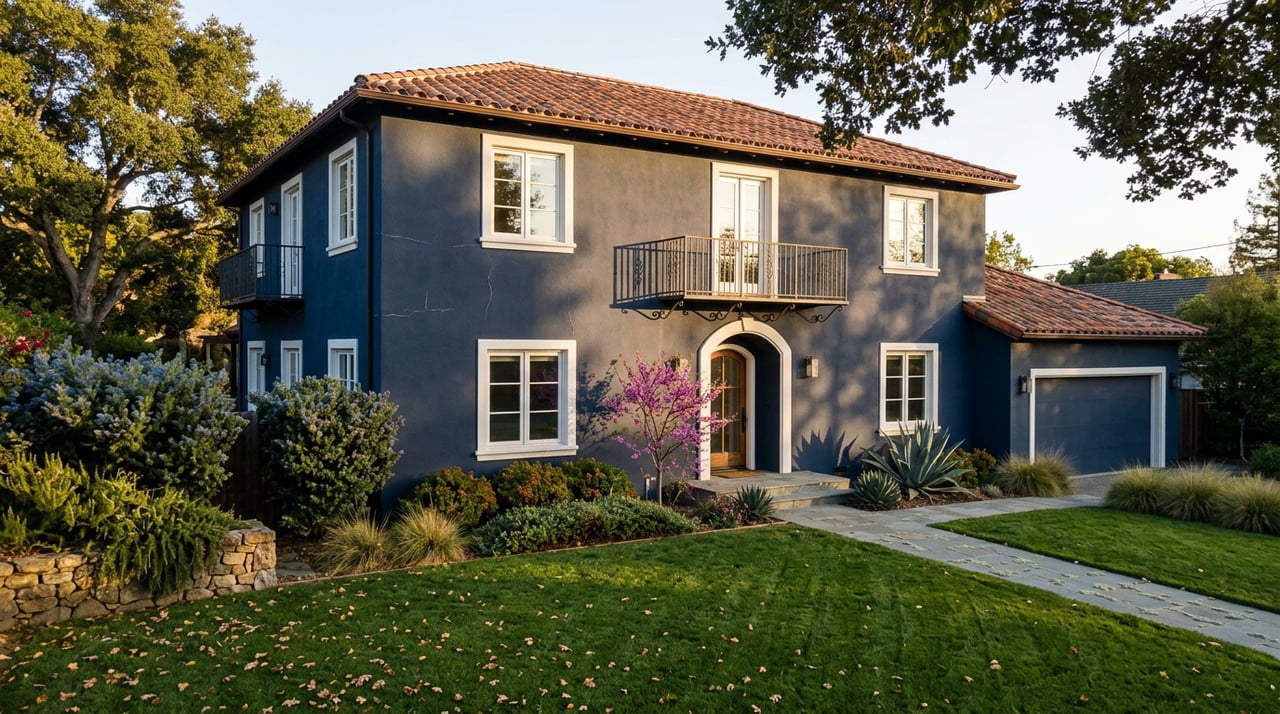
Piedmont Doesn't Have a Downtown. This Summer, It Built One Anyway.
September 3, 2026
September 3, 2026
By 5 p.m. on a Friday evening in July, Highland Avenue in Piedmont Park smelled like fry oil and lobster butter. Kids cut across the grass toward Chick-N-Go and Cousins Maine Lobster Truck. A line for Kona Ice snaked past a family working through empanadas from Crazy Empanadas. DJ Kev worked the crowd from a folding table while blankets and lawn chairs filled in around him. Nobody paid a cover. Nobody needed a reservation. It was July 17, the first Food Truck Friday of a season the city itself has been calling a brand-new Piedmont tradition.
That word, new, is worth sitting with. Piedmont is not a place known for adding things. It is a small city, just over 11,000 residents, almost entirely zoned for single-family homes, with barely any commercial strip to speak of. So when a Friday night gathering like this shows up out of nowhere, in a place that structurally has almost nowhere to go out to, it says something about how this city actually works.
Piedmont's commercial footprint is genuinely tiny. The city carries a small cluster of businesses on Highland Avenue and another handful on Grand Avenue near the Oakland border, and not much else. It runs on property taxes and fees rather than a business tax base, because there is barely a business tax base to run on. That is not a complaint. It is a design choice residents have made for over a century, and it is a big part of why people move here and stay: quiet streets, no strip malls, no traffic generated by a downtown that doesn't exist.
But it means the things other East Bay neighborhoods get from private business, a new restaurant opening, a bar expanding its patio, a bakery adding weekend hours, simply are not available to Piedmont the way they are to Rockridge or Temescal or Piedmont Avenue in Oakland (a different place entirely, despite the name). If Piedmont wants a Friday night hangout, a private developer is not going to build one. The city has to.
That is exactly what happened this year. The food trucks that now line up along Highland Avenue on select Fridays are not a business opening. They are a permit, a parking arrangement, and a recreation department calendar. The same is true of the much bigger project sitting on the same city blocks: the Piedmont Community Pool, which reopened this spring after six years with no public pool at all.
The old Piedmont pool, built in 1964, closed in March 2020 when the pandemic hit. By September 2020, the city council decided to keep it closed rather than reopen it as-is, citing a broken heater, the difficulty of managing swimmers safely during COVID, and a pool that was leaking about 3,000 gallons of water a day. It never reopened in its old form. In November 2020, Piedmont voters approved Measure UU, a bond authorizing up to $19.5 million to build a replacement, by a 68.47 percent margin.
What actually got built took until this April, and it turned into one of the largest capital projects in city history, with a final cost reported at $35 million by the San Francisco Chronicle. The new competition pool holds 12 lanes, double the original six, at a full 27 meters with a diving well. A separate, much larger activity pool, roughly 3,100 square feet with zero-depth entry, sits alongside it. Both are heated entirely by electricity rather than gas, making the facility one of only two all-electric municipal pools in California, the other being Rengstorff Park in Mountain View.
For six years, Piedmont High's water polo and swim teams had nowhere local to practice. For much of that stretch, the only slot they could get was 8 p.m. at the Berkeley High pool. Along the way, practices and lessons were also scattered across pools in Emeryville and at the Mills College campus, and in the final weeks before the new pool opened, the team shifted again, to St. Mary's College in Moraga, 13 miles from home. The old competition pool had also been too shallow for real water polo play. As one coach told KTVU after the reopening, "the competition pool is deep enough that both teams can do the egg beater," a small detail that says a lot about how long the previous facility had been quietly failing its own athletes.
The ribbon-cutting on April 10 happened in a downpour. Eric Havian of the Piedmont Recreation Fund, the volunteer group that raised more than $2 million in private donations to help close budget gaps, addressed the crowd anyway. Mayor Betsy Smegal Andersen cut the ribbon a second time the next morning when the pool actually opened to the public.
"The whole community had to come together to make this happen."
As quoted by KTVU.
That line, spoken at the reopening, applies just as well to the food trucks a few blocks away. Neither one exists because a business owner spotted an opportunity. Both exist because the city, and the people who fund it through bond votes and donation drives, decided they should.
Put the two threads together and a pattern emerges that would look strange anywhere else in the East Bay. Piedmont's Recreation Department is functioning as the neighborhood's commercial district substitute. It hires the lifeguards, at $19.50 an hour to start. It books the food trucks. It schedules the movies. Even the Piedmont Center for the Arts, which ran a run of summer concerts earlier this month, from a jazzy folk duo to a boogie-woogie piano set, operates as a nonprofit filling a gap that a commercial venue would fill in a city with more zoning flexibility.
The Piedmont High Highlanders football team opened its season last week under the lights at Witter Field, hosting Napa on Friday, August 28. That, too, is public infrastructure doing double duty as community gathering space, since Piedmont has no other venue built for a crowd that size.
None of this is an accident of the moment. It is what a city with almost no private commerce has to do if it wants any version of a Friday night out. This year, for the first time in a long time, it did.
For residents still working out which Fridays matter, the rest of the season looks like this:
In most of the neighborhoods this site covers, the summer story is about what opened where. In Piedmont, the story is a bond measure that passed by a two-thirds margin six years ago, a fundraising drive that closed a budget gap, and a recreation department calendar that had to be built from nothing. That is a different kind of neighborhood signal, and it tells you something real about what living here actually feels like: quiet, low-commerce, and dependent on the city itself to supply what other places get from the market.
If that tradeoff sounds like the kind of place you'd want to understand better, from the pool schedule to the school district to what a Highland Avenue address actually costs, East Bay Digs offers a free neighborhood consultation for anyone curious about calling Piedmont home.
October 15, 2026
October 8, 2026
October 1, 2026
September 24, 2026
September 17, 2026

September 10, 2026

September 10, 2026
September 3, 2026
August 27, 2026
Get assistance in determining current property value, crafting a competitive offer, writing and negotiating a contract, and much more. Contact me today.